
An overlooked corner of complementary medicine just produced one of the most striking adherence numbers in recent ALS research: a coach-guided online yogic breathing program where attendance topped 97% across twelve sessions. The pilot, presented this spring at the American Occupational Therapy Association’s INSPIRE 2026 conference and published in the American Journal of Hospice and Palliative Medicine, is small — but the signal it sends about what people living with amyotrophic lateral sclerosis can stick with from home is hard to ignore.
For more on breathing practices and respiratory health, see how a 2026 controlled study linked yoga to better lung function in COPD patients.
What Happened
Researchers at the University of Alabama at Birmingham, led by Assistant Professor Sarah Beth Spraberry of the School of Health Professions, ran a pilot mixed-methods randomized controlled trial of a coach-guided online yogic breathing program for adults living with ALS. The intervention itself was lean: twelve 30-minute sessions delivered online by a certified yoga instructor, layered onto whatever standard care participants were already receiving from their neurology and palliative care teams.
What made the trial notable wasn’t a dramatic claim about reversing motor neuron disease. It was the participation rate. Across the full twelve-session arc, attendance topped 97% — a figure that exercise scientists rarely see in healthy populations, let alone in adults navigating fatigue, mobility loss, and respiratory weakness. Participants in the breathing group also showed significant improvements in quality-of-life domains tied to physical symptoms and intimacy, two areas that decline early and steeply in ALS but rarely get an evidence-based intervention.
In follow-up qualitative interviews, participants described two recurring benefits in their own words: a greater sense of control over their breathing, and emotional regulation through relaxation. Spraberry presented the findings at AOTA INSPIRE 2026 alongside other University of Alabama at Birmingham occupational therapy researchers, with the full paper running in the American Journal of Hospice and Palliative Medicine.
Why It Matters
Respiratory decline is the central problem in ALS. As motor neurons degenerate, diaphragm strength falls, airway clearance weakens, and forced vital capacity drops on a timeline that ultimately determines both quality and length of life. Standard respiratory therapies — non-invasive ventilation, mechanical insufflation-exsufflation, inspiratory muscle training — work, but they are equipment-heavy and clinic-tethered. Many patients can’t easily get to a clinic, and home-based options that produce real engagement remain scarce.
That’s the gap a structured online yogic breathing program is designed to fit into. The Spraberry trial isn’t claiming yoga replaces mechanical insufflation or BiPAP. It’s testing whether a behavioral, breath-focused intervention — already supported by decades of broader pranayama research on autonomic regulation — can travel into ALS care without losing the participants. The 97% adherence number suggests it can.
Quality-of-life gains in physical symptom and intimacy domains also speak to a population that often reports feeling clinically managed but personally invisible. A breath practice that produces a felt sense of control — even briefly — addresses the part of disease progression that pulls case rates and survival curves out of focus and reminds clinicians that “how this feels” matters too.
The Methods Behind The Trial
The pilot was a mixed-methods randomized controlled trial — a design that pairs a quantitative comparison between groups with structured qualitative interviews. Co-author Hon Yuen, PhD, OTR/L, the program’s research director, described the intervention as a coach-guided format: a live certified yoga instructor delivered each session via video, watched participants’ form within the limits of online practice, and adjusted the breath pacing in real time when needed.
Each of the twelve sessions ran 30 minutes — short enough to fit between caregiving and clinic appointments, long enough to move past the first few breaths most beginners struggle with. The breathing techniques drew from classical pranayama foundations: slow, controlled diaphragmatic breath; lengthened exhalations; and gentle pacing patterns that engage the parasympathetic side of the autonomic nervous system. Participants weren’t asked to do strenuous postures. The intervention was a breathing protocol, with seated body positioning that any wheelchair user can replicate.
That accessibility is part of why the design works. ALS progression doesn’t pause for an in-person yoga class. A coach-guided online format meets participants where they actually are: at home, often on a power chair, often with a caregiver in the next room. The program’s near-universal attendance suggests participants found it doable on a bad-fatigue day, not just a good one.
What Yogic Breathing Looks Like For ALS Patients
The exact protocol used in the Spraberry trial blends standard pranayama techniques with adaptations for limited respiratory capacity. The general shape, drawn from the broader yoga therapy literature, looks like this:
- Diaphragmatic breath (belly breath). Slow inhalation through the nose, allowing the lower ribs and abdomen to expand. The diaphragm does most of the work, sparing accessory neck and shoulder muscles that fatigue quickly in ALS.
- Lengthened exhalation. A controlled exhale longer than the inhale (for example, 4-count in, 6-count out) shifts autonomic tone toward the parasympathetic branch, which reduces heart rate and softens the sense of breathlessness.
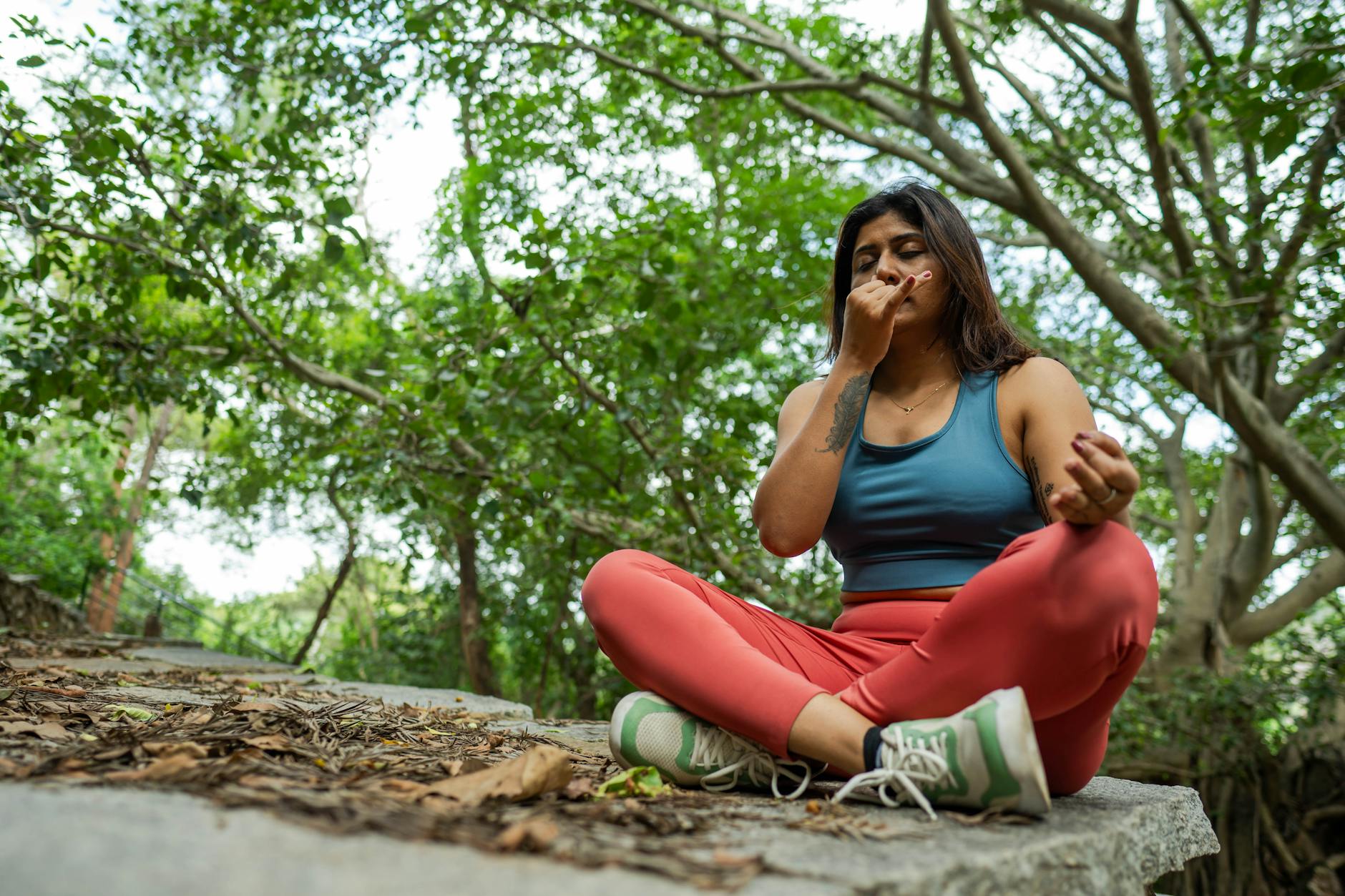
- Alternate nostril breathing (nadi shodhana), modified. A balancing pranayama practice often adapted for limited hand mobility — caregivers or breath visualization can replace the traditional finger placement. See our complete guide to nadi shodhana for the full mechanics.
- Bhramari (humming bee breath). Soft humming on the exhale stimulates the vagus nerve and produces an immediate relaxation response, which several pilot participants identified as a favorite.
- Coordinated breath–movement. Where mobility allows, breath is paired with very gentle arm or shoulder movement — the same coordination principle used in wheelchair yoga.
None of these techniques are unique to ALS care. What’s new is the format: short, online, coach-led, and held together over twelve weeks rather than offered as a one-off pamphlet handed out at a clinic visit.
What This Means For You
For someone living with ALS, or caring for someone who is, the headline takeaway from this pilot is permission. Permission to ask the neurology team about adding a structured breathing practice. Permission to pick a format you can actually sustain — twelve 30-minute coached sessions over twelve weeks, on a screen, at home — instead of trying to add another clinic trip. Permission to expect that the intervention will produce a felt sense of control over breath, not just a chart-able number on a pulmonary function test.
For people without ALS but living with other respiratory or chronic conditions — long COVID, COPD, post-viral fatigue, asthma — the same design principles apply. A coach you can see weekly. A protocol short enough to fit a low-energy day. Diaphragmatic breath as the foundation, not advanced postures. Our overview of breathwork certification outlines what to look for when picking a teacher; for a more inclusive entry point, the wheelchair yoga guide walks through how to start a seated practice.For occupational therapists, palliative care clinicians, and yoga teachers working with neurodegenerative populations, the Spraberry pilot is a usable template. Online delivery, certified instructor, twelve sessions, mixed-methods follow-up. It’s reproducible.
Key Takeaways
- A pilot RCT presented at AOTA INSPIRE 2026 and published in the American Journal of Hospice and Palliative Medicine tested a coach-guided online yogic breathing program for adults with ALS.
- Adherence across twelve 30-minute online sessions exceeded 97% — exceptionally high for any chronic disease intervention.
- The breathing group showed significant improvements in quality-of-life measures tied to physical symptoms and intimacy.
- Qualitative interviews highlighted two themes: a greater sense of control over breathing, and emotional regulation through relaxation.
- The protocol is reproducible: certified yoga instructor, online video format, short sessions, classical pranayama techniques adapted for seated and wheelchair-using participants.
- The findings are pilot-stage and not a substitute for non-invasive ventilation or other standard ALS respiratory care, but they validate breathwork as a feasible add-on.
Source: Spraberry SB, Yuen H, et al. Pilot mixed-methods randomized controlled trial of a coach-guided online yogic breathing program for adults with amyotrophic lateral sclerosis. Findings presented at AOTA INSPIRE 2026 (University of Alabama at Birmingham School of Health Professions) and published in the American Journal of Hospice and Palliative Medicine.
